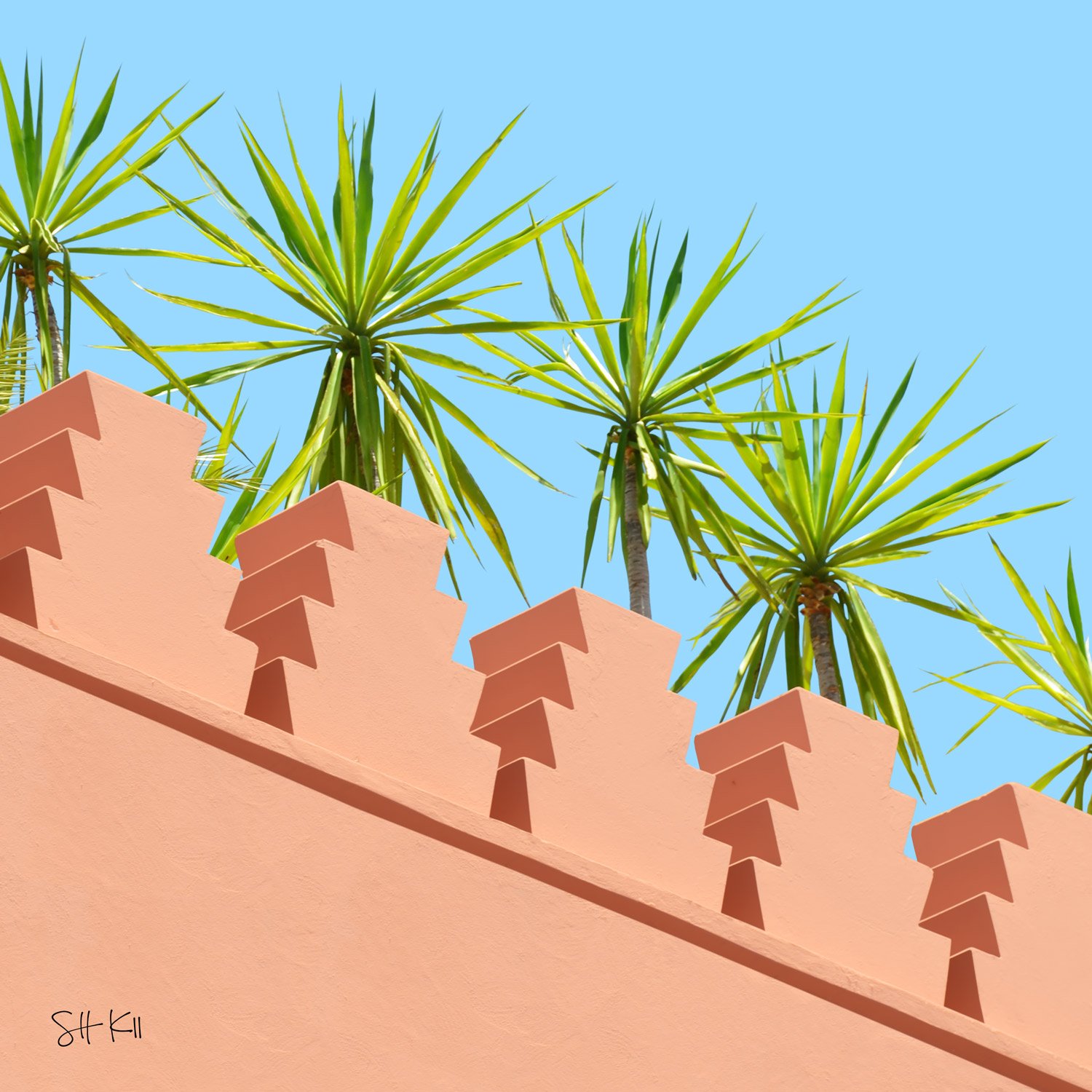
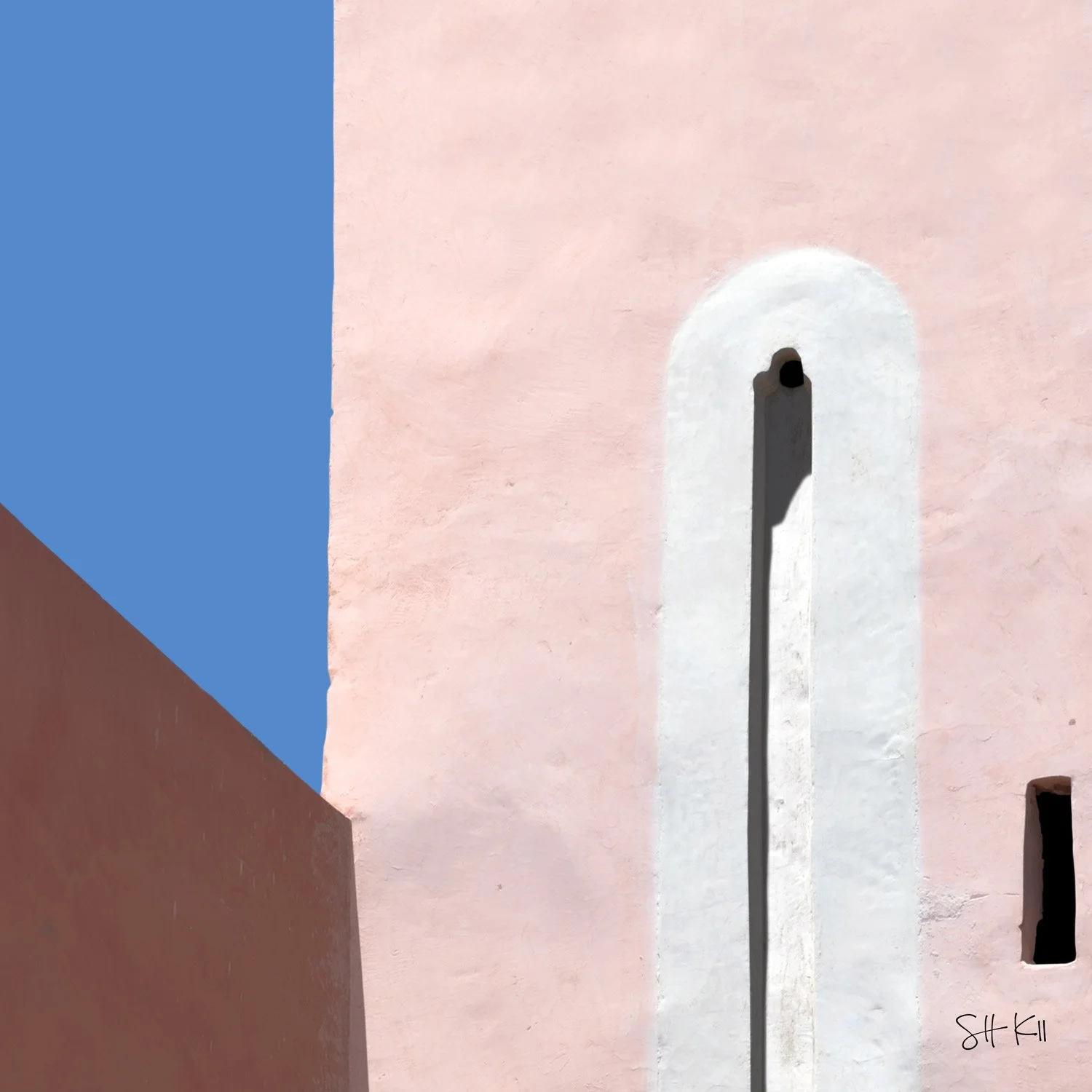
 Image 1 of 3
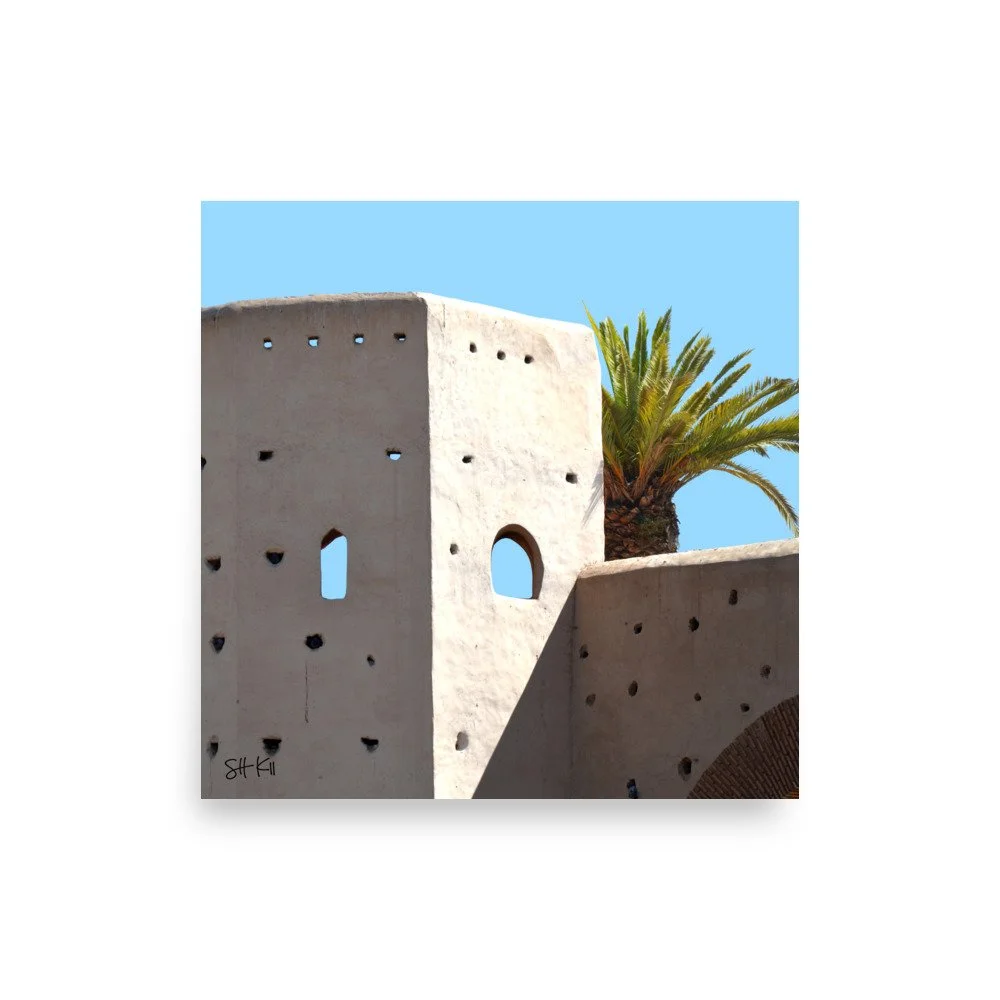 Image 2 of 3
 Image 3 of 3
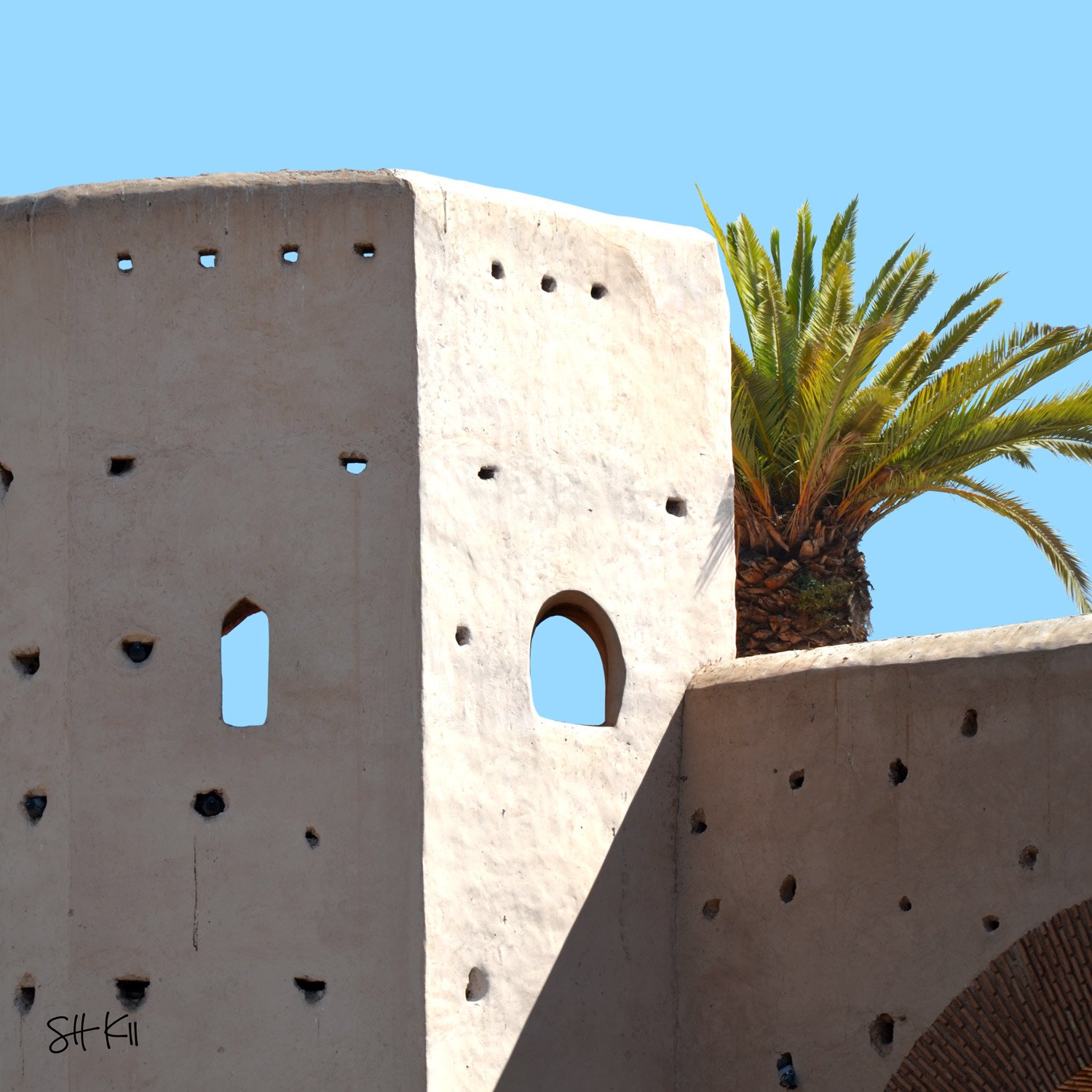
The walls of the Marrakech Medina are among the oldest continuously inhabited architecture in the world, and their surface tells you how they were made. The small circular holes scattered across this facade are putlog holes — the voids left when wooden scaffolding poles were removed after construction, a record of labor embedded in the earthen surface and never filled. The material is pisé: rammed earth, packed between formwork in horizontal layers, a technique so well adapted to the Moroccan climate that it has remained in continuous use for over a thousand years. Two small windows break the surface — one a narrow slot, one a small pointed arch — and above the stepped wall edge, a date palm rises against the blue sky. Earth, geometry, and the tree that has always grown beside them: the architecture and the landscape in their oldest configuration.
🖼️ Need help finding a gallery wall frame for your prints? We’ve put together a list of gallery wall frames available for each of our frame sizes.
🚚 Curious about delivery times? Reference our worldwide delivery time blog post.