
About the artist
I photograph buildings until they stop being buildings.
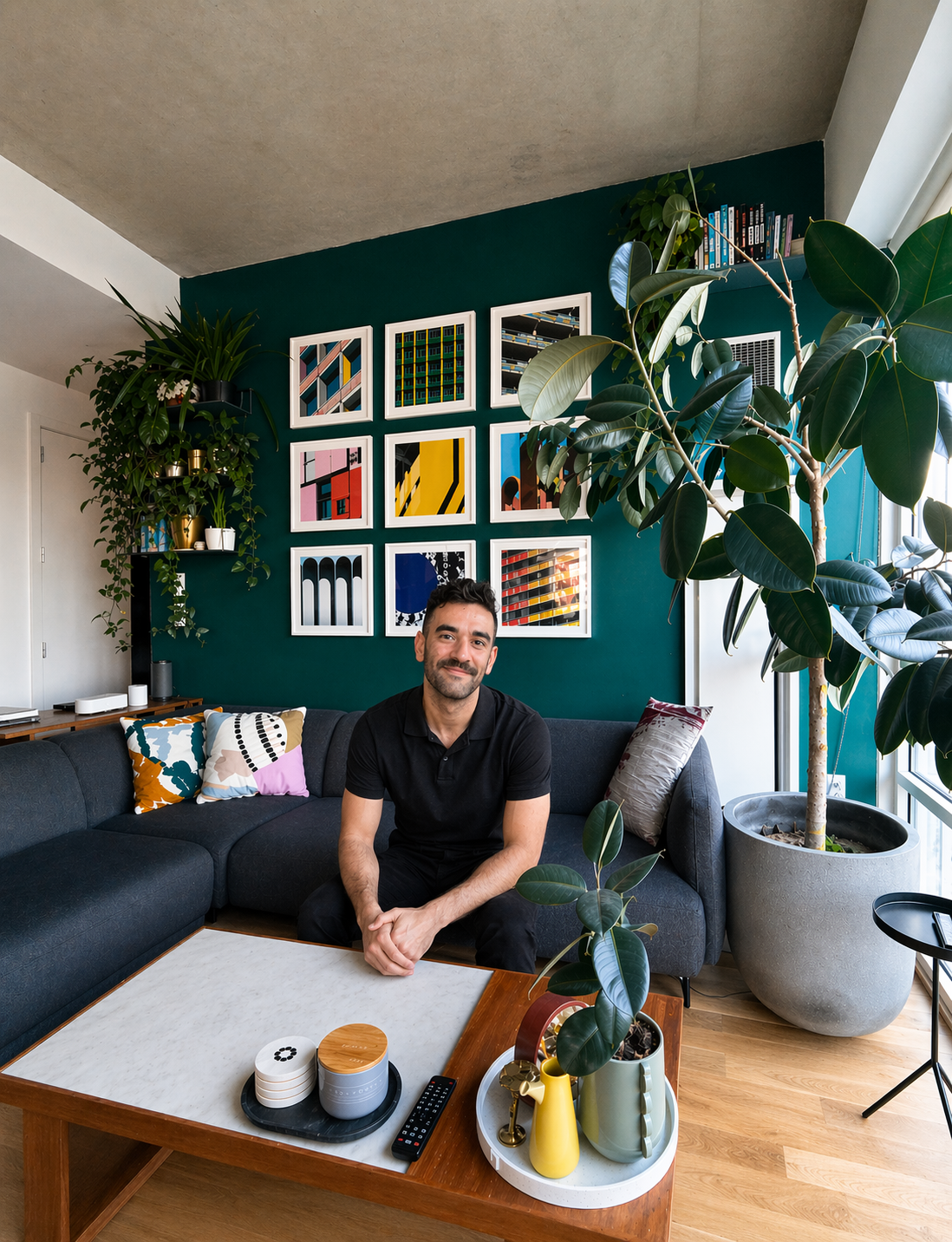
Based in New York, I've spent over a decade training my eye on the built world — not to document it, but to abstract it. My work sits somewhere between architectural photography, graphic design, and color field painting: facades become canvases, shadows become geometry, and structures designed by the world's most ambitious architects reveal something quieter and more elemental than their reputations suggest.
My subjects span continents — Le Corbusier's Berlin, Ricardo Bofill's Costa Blanca, the medinas of Marrakech, the boulevards of Buenos Aires, the Brutalist riverbanks of London — but the instinct behind each image is the same: find the frame where architecture becomes abstraction.
Architecture was my first visual language. I studied it at Cornell University, interned at firms back home, and spent a summer in Tokyo working for Sou Fujimoto — one of the most celebrated Japanese architects of his generation. I never became a practicing architect. Instead I moved into graphic design, then art direction, then spent the last nine years as a product manager in software. But the love never left. What photography gives me is a way back in — a reason to stand in front of extraordinary buildings and look at them the way I was trained to: as compositions of form, light, and intention. Photography just gave the obsession somewhere to go.
My style lives or dies by the sun. Every shot depends on the precise intersection of a building's form, the angle of approach, and the position of the sun — and that combination only exists for minutes at a time, if it exists at all. I plan around solar charts, track when light will hit a specific facade, and travel with the patience of someone who knows the shot might not come. The Barbican is the best example: I visited London three times before I got what I was looking for, sitting in the courtyards watching clouds, waiting for the light to move across the concrete the way I knew it could. Cities like London — grey, unpredictable — make it harder. They also make it more honest. I don't manufacture shadows. The waiting is what lets the craft do its work.
About my prints
Digital prints
Printed on Epson Ultra Light Premium Luster Photo Paper which is somewhere between gloss and matte, for an extremely saturated look and maximum color coverage.
Finished with a glossy finish to help with fingerprint resistance.
Orders are printed on demand and shipped directly to you.