
Ricardo Bofill's Muralla Roja: Inside the Color-Coded Maze
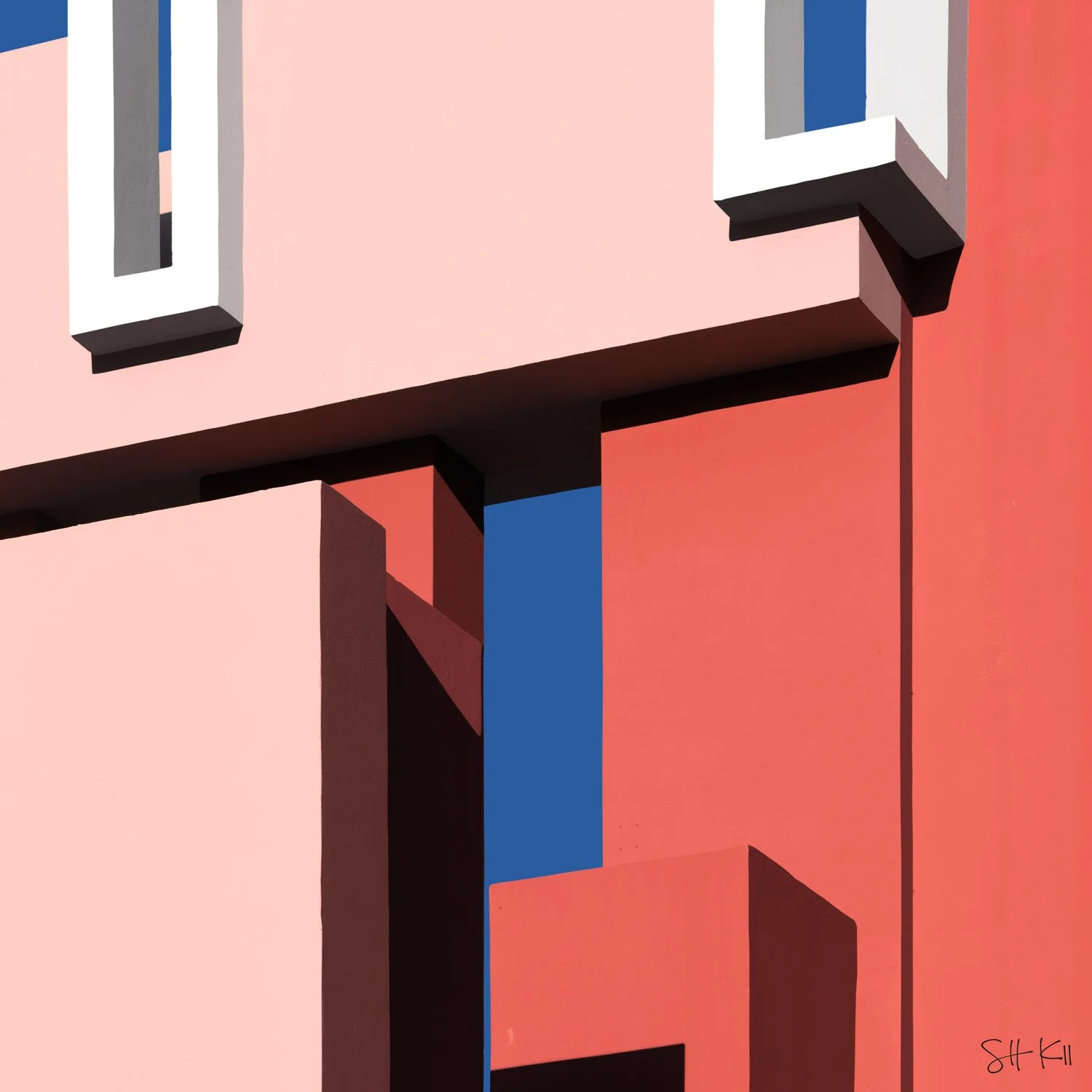
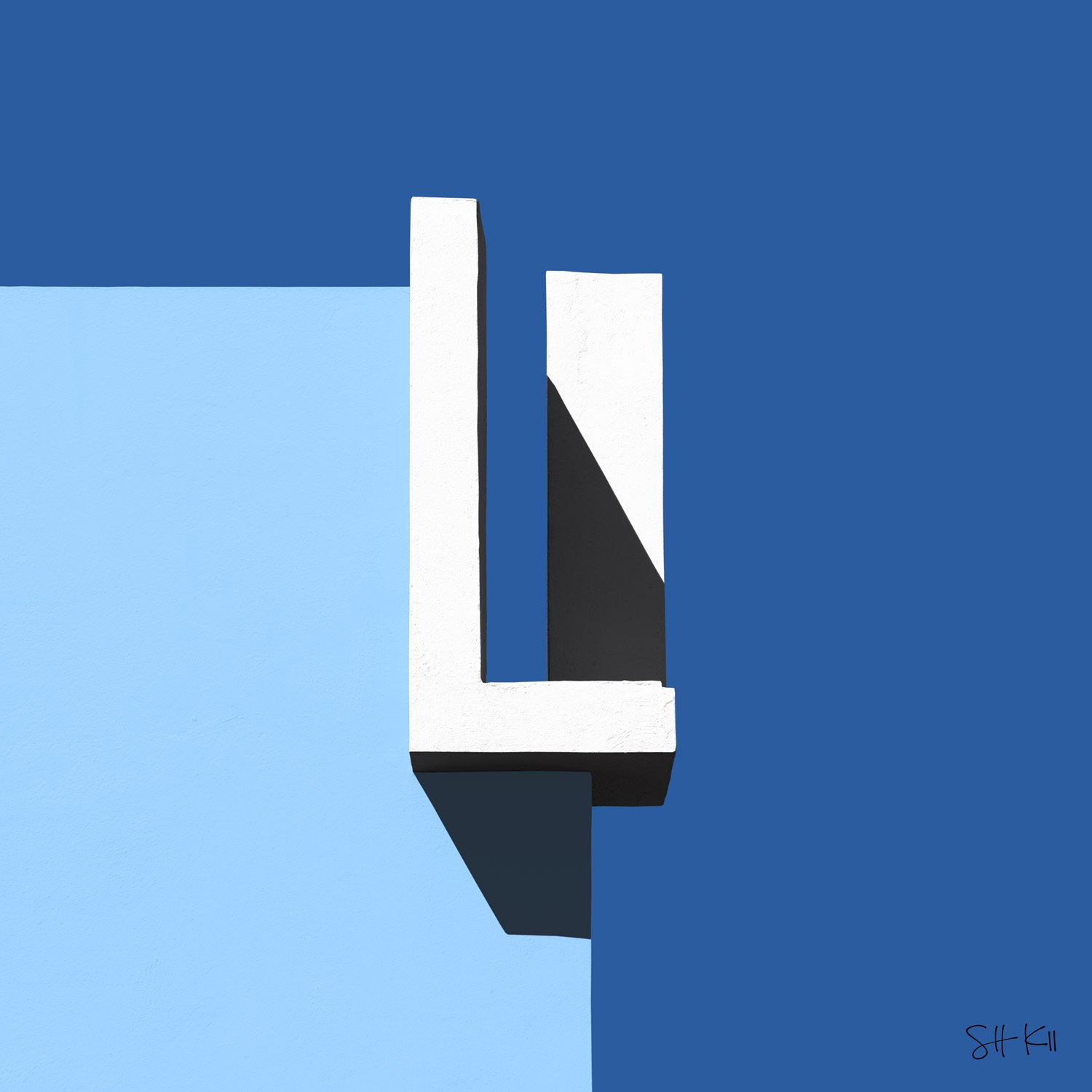
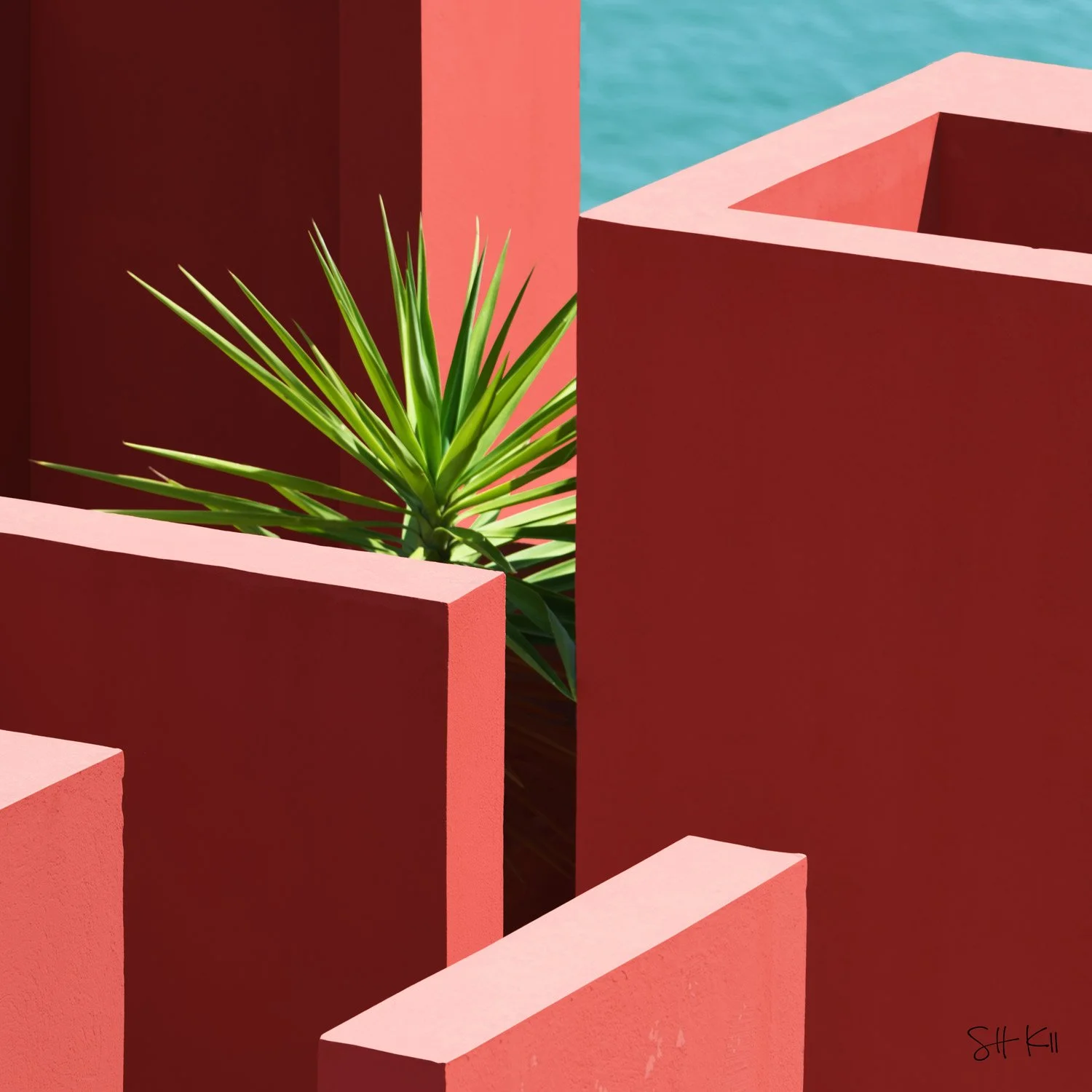
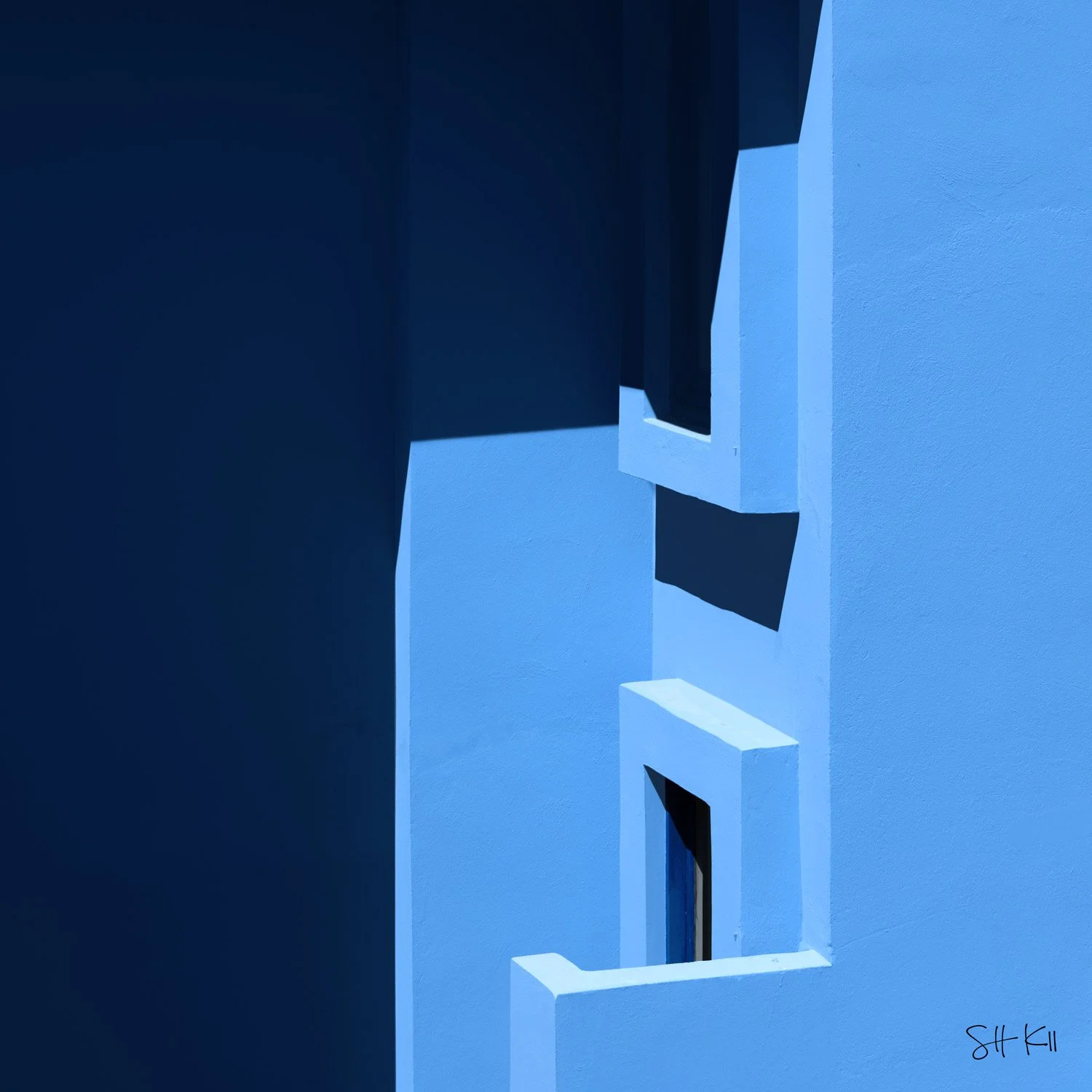
I wanted to photograph La Muralla Roja for years before I finally got there in 2019, two years before most of the world found out about it. I had a feeling it wouldn't stay under the radar much longer. Sure enough, when Squid Game premiered in 2021, its now-iconic pastel staircase set was widely cited as drawing directly on this building's maze of color-coded stairwells. By then I'd already spent four days inside it, sleeping in an Airbnb tucked into the complex itself and walking its bridges and courtyards from first light until the sun gave out.
That's the thing about Muralla Roja: of every building I've photographed, none gets closer to what my work is actually about. My photographs live somewhere between photography and graphic art, and this building already looks like an illustration before I've touched a single pixel: hard color blocking, a geometry with no straight or predictable hallway, an architecture that reads as composition first and shelter second. Put it next to the glass-and-steel towers that define most contemporary buildings, and it barely reads as the same category of architecture.
Ricardo Bofill, one of my favorite architects, designed it in 1968 and finished construction by 1973, part of the La Manzanera development on Spain's Costa Blanca. He drew on the North African casbah, the fortified, labyrinthine architecture of the Mediterranean Arab world, and rebuilt it through the precise logic of a Greek cross. His collective, Taller de Arquitectura, treated the building less like fifty apartments and more like an argument about how public and private space should work. Standing inside it, the echo is unmistakable: it feels less like coastal Spain and more like wandering a medina in Marrakesh.

What I didn't register while I was there, and only appreciated afterward, is that Bofill's color choices weren't purely decorative. The blues, reds, and pinks worked as a wayfinding system, helping fifty households navigate a structure with no obvious logic to its layout. They also did something harder to engineer: they made that function feel like delight instead of necessity. Coming to photography through architecture, that's exactly the kind of intentionality I go looking for.
It's also, practically, somebody's home. La Manzanera is full of Spaniards who bought into Muralla Roja as a second home on the coast, and I felt that the entire time I was there, especially watching tourists arrive with models for staged shoots, treating the building like a backdrop rather than a place people live. More than once, a resident asked if I'd broken in. I hadn't; I spent my time in Calp at an Airbnb inside the building. But the tension never fully went away, and it shouldn't have. I was a guest in someone's home before I was anything else.
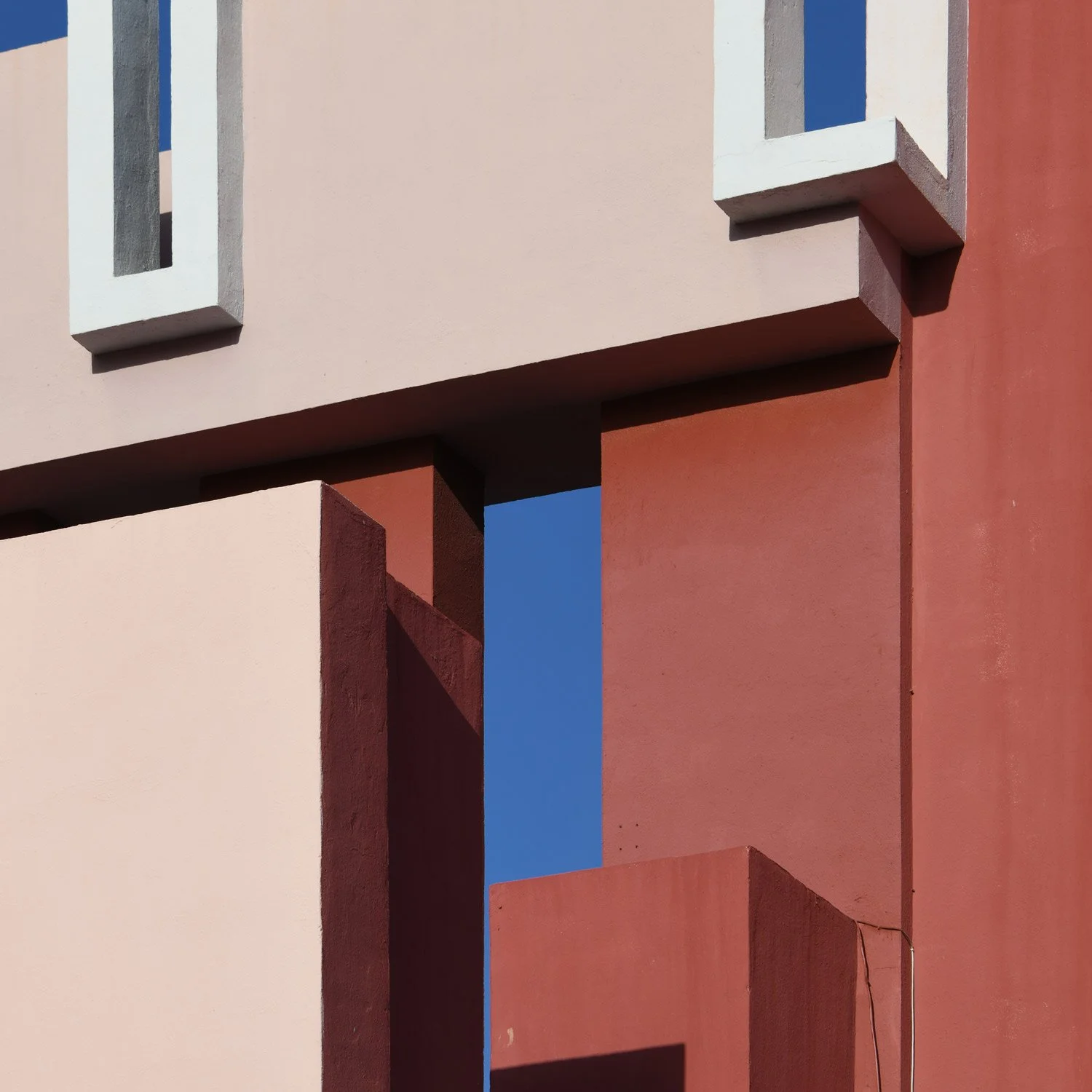
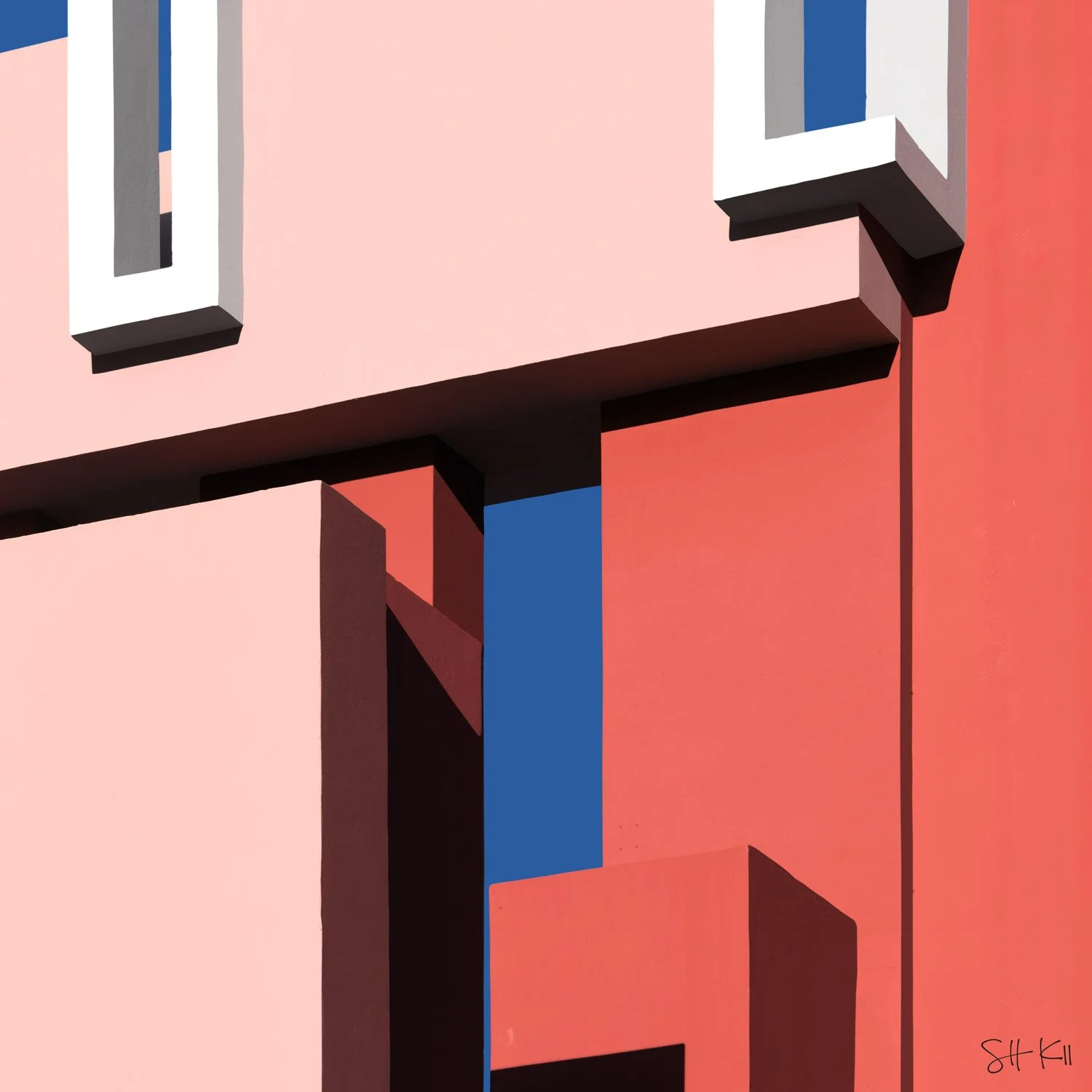
The editing is where the building becomes fully mine. I don't just document Muralla Roja as it exists today, sun-bleached and worn the way fifty years of coastal weather will do to any building. I work to restore something closer to what I imagine Bofill had in his head when he designed it, a perfectionist's version of the architecture, closer to intention than to wear. That's where the line between photograph and illustration gets genuinely blurry, and it's also the reaction I love most. At Clio Art Fair, people would stand in front of these prints, lean in, and ask if they were actually photographs. Every time, that question is the whole point.
If I had to pick one image that says everything I'm trying to say, it's Muralla Roja 01, still the favorite photograph I've ever taken. I shot dozens of versions of that exact view at different times of day, chasing one specific shadow: the diagonal line that splits blush pink from deep coral, with a single band of cobalt cutting straight through it. There's an old adage that you shoot a hundred frames to land the one or two that work. Across those four days, I shot nearly a thousand photographs as I wandered through the complex, ultimately choosing thirty-two for the final series. You can see Muralla Roja 01 and the rest of the series in the print shop.